

On the Bald Eagle
Benjamin Franklin thought we deserved a better national bird. I argue that we don't.

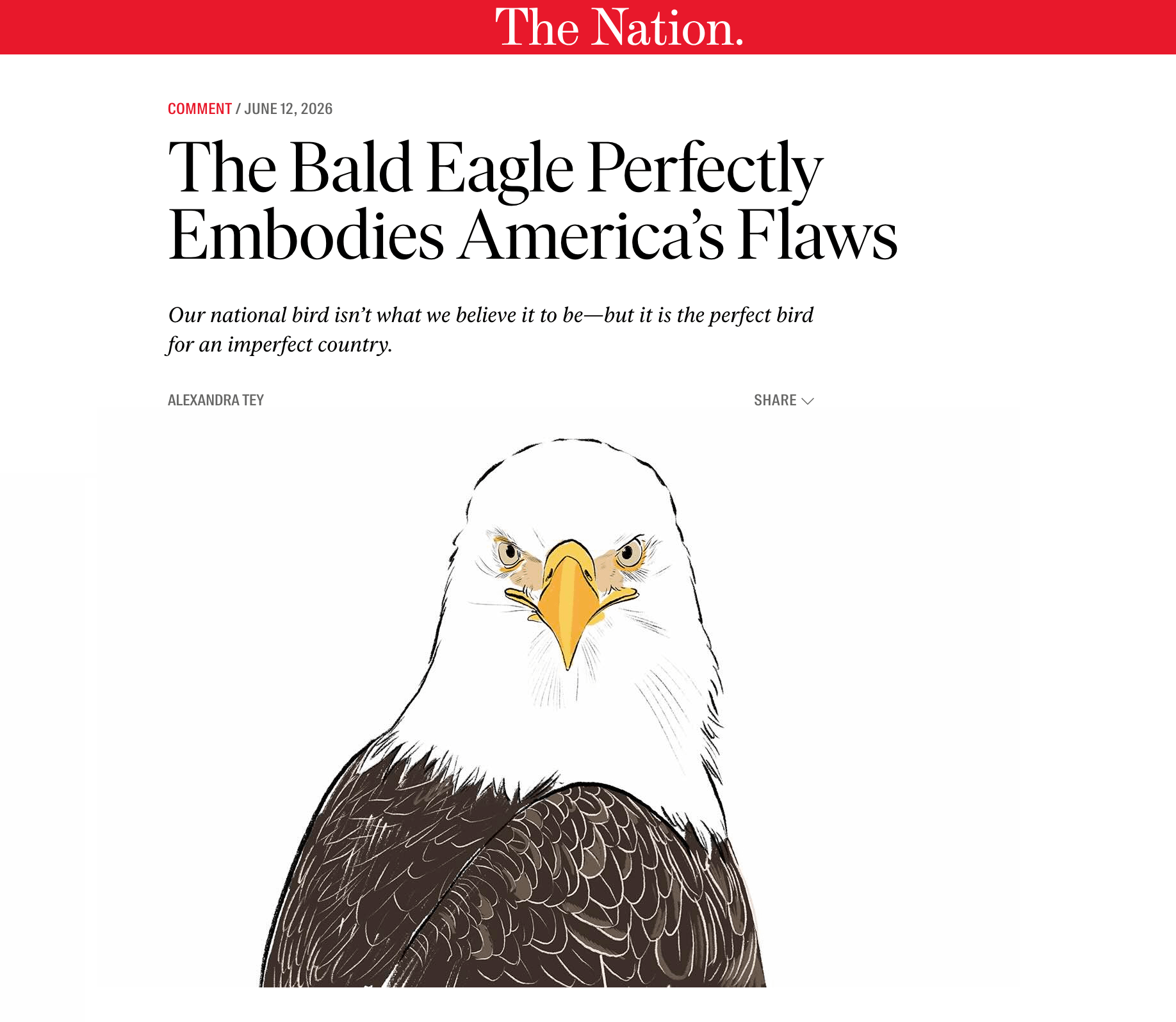
For the 250th anniversary of the independence of the United States, I investigated the fraught symbolism of our national bird. Read the full article on The Nation‘s site (archived version here):
For over two centuries, the United States has invested its identity in the bald eagle as a noble apex predator, but the eagle of our national imagination distorts the real bird along lines that parallel our country’s deepest flaws. In truth, the bald eagle is a larcenous opportunist that gets by on brute strength. It issues no defiant scream. Yet we as a nation have come to identify a set of virtues in the bald eagle that we claim for ourselves—when, in truth, they are virtues we both lack.
I like to have fun on the July 4 holiday as much as anyone else, but I also think of the day as an opportunity to collectively reflect on what the country has been and is becoming. In the piece, I quote the early American naturalist William Bartram’s assessment of the Bald Eagle’s character as an “execrable tyrant” as being unfair to the bird.
But when he wrote (in 1766!) that it “supports [its] assumed dignity and grandeur by rapine and violence, extorting unreasonable tribute and subsidy from all the feathered nations”—well, that’s not a bad description of the country the United States would go on to become. 🪶